 As a country, there is a host of issues we widely accept as national priorities: the poor state of our public finances, the cost of living, the health service, crime. And rightly so. These are the issues we feel most in our lives.
Further down that list, and consistently so based on You.Gov’s polling of the most important issues facing our country, is education. This is a grave error of national judgement.
Our public attitude towards education is driven by a combination of perception and lived experience. Do we have a problem with education in this country? For most people, the answer is ‘no’.
And that’s because the quality of our schools and our teachers has risen markedly over the past 30 years. The average parent has a good experience of their local school. Indeed, the previous government will trumpet education as a national success story.
When one-word Ofsted overall-effectiveness judgements were finally scrapped shortly after the election, 91% of schools were rated ‘good’ or ‘outstanding’ by Ofsted. A sure sign of high standards for all our children – or so the story went.
Because it was just that! A story, a piece of fiction. The public were being sold a lie.
Yes, our education system serves the average child well. But is that really the limit of our ambition?
When 90% of ‘good or outstanding’ schools include schools in the bottom 1% for exam results, you know that old measure of success has outlived its validity.
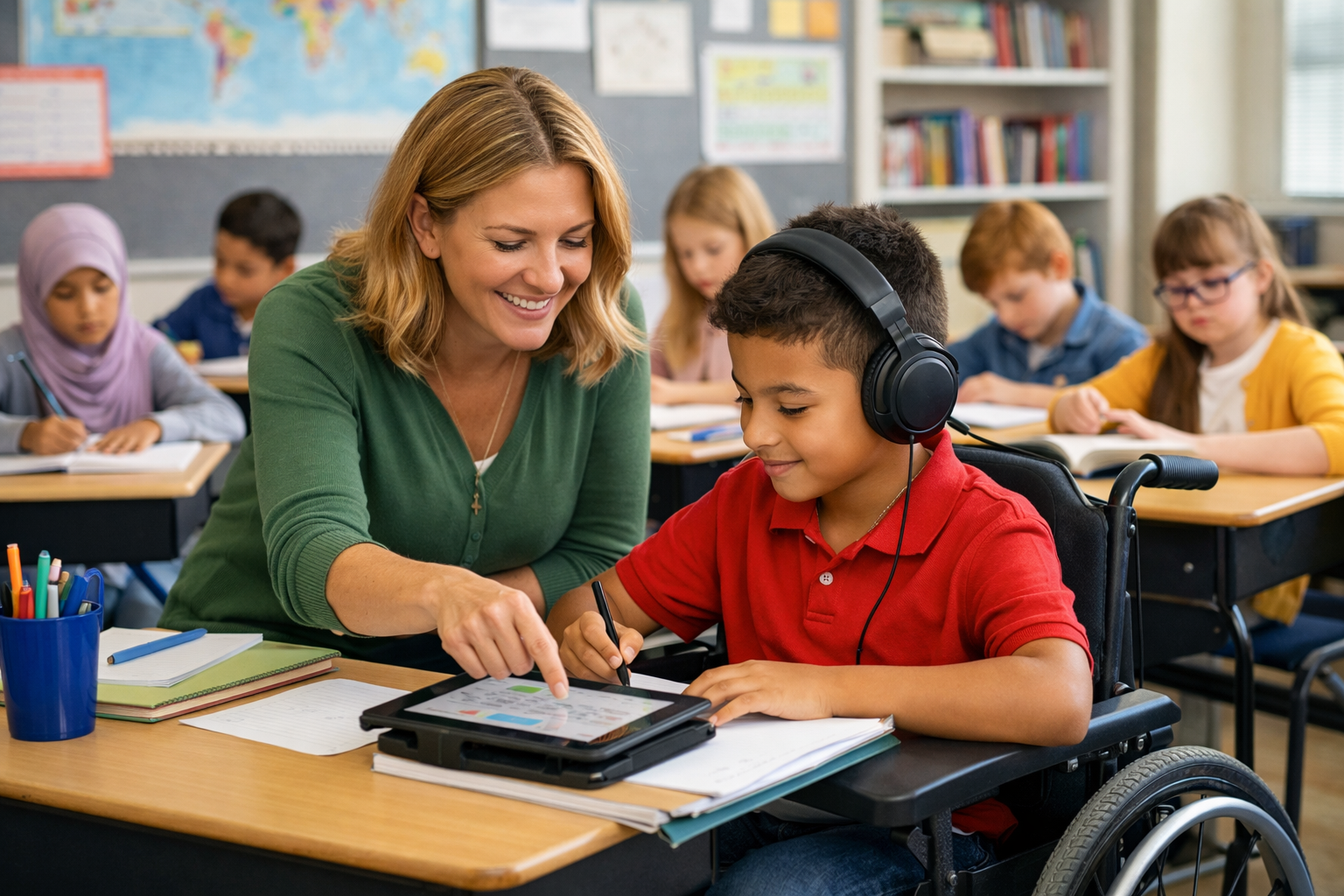
But more importantly than that – much more importantly – it failed to take into account how our education system is supporting all of our country’s children-the poorest, those with special educational needs and disabilities.
For too long, inclusion has been at the margins of accountability, and by extension, of school standards.
Results matter. Academic rigour matters. But inclusion also matters. Inclusion and attainment are not competing priorities. The best schools prove it. They refuse to lower expectations; they support pupils properly, and their results tell their own story.
And when that doesn’t happen – when our system provides the wrong incentives and turns a blind eye, as it has done – it’s children with SEND and those from the most disadvantaged families and communities who have their life chances damaged.
School absence levels for children with SEND are around twice that of other children. Nearly a third of young people with SEND are not in education, employment or training (NEET) – again, twice the rate of others.
What sort of system claims “high standards” while failing such a high proportion of its most vulnerable young people?
So what needs to change?
Accountability shapes behaviour. What you measure determines what schools prioritise, and we have a system that doesn’t recognise the hard work and expertise of supporting children with SEND or additional needs
Inclusion, high expectations and proper, early support is a route to stronger performance for all children. Schools that build cultures of belonging, strong behaviour and early intervention do not see standards slip. They see them strengthen. Indeed, as a head teacher, I was very clear that developing strategies to raise standards for the poorest and the most vulnerable students would read across the whole school and encompass all of our students.
So, I welcome Ofsted’s renewed inspection framework and its standalone ‘Inclusion’ judgement – now given the same weight as areas like curriculum and teaching. The move to scrutinise how schools meet the needs of all children is an important and necessary shift. Inclusion must be treated as a marker of quality.
But inspection alone is not enough. The Schools White Paper must bring coherence to the system, strengthening accountability, increasing funding and raising expectations.
These reforms provide a rare opportunity to take the best of what’s working and overhaul what’s not. That means building the capacity of schools to meet a broader range of need and stating plainly that high standards only have meaning when they apply to every child.
And after that, we should be unequivocal about what excellence looks like. A school that posts impressive GCSE results by quietly removing pupils who challenge the data is not outstanding. It is protecting its averages. True excellence is found where leaders keep children in school, insist on high expectations, provide effective support and secure strong outcomes across all groups. That is the benchmark.
And if we can do this; if we can truly deliver high standards for all children, it’s our economy, our health service, our fight against crime that will benefit.
High standards for some are not high standards at all – and high standards for all should be a national priority.